
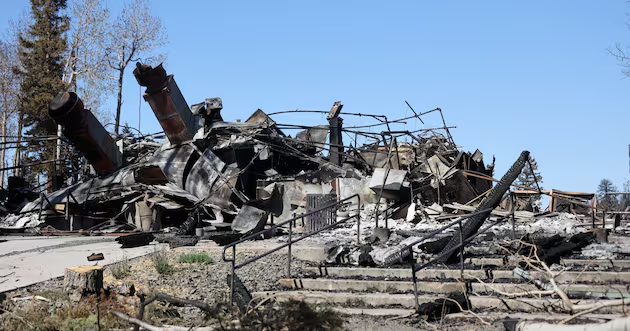
Utah summers have gained a reputation for presenting a grim reality: the constant threat of wildfires. Every year, fear sets in as unpredictable blazes ignite, threatening homes, lives and livelihoods all season long.
Read more Are foreign actors actually influencing the data center debate?
So far in the 2026 season, Utah has experienced 743 wildfires with over 387,000 acres of our precious land burned.
Federal agencies currently oversee nearly 70% of Utah, yet local leaders are constantly left without the authority to take preventive action on federal acres. State departments are on the ground daily. They know and love this land, and I believe it’s up to the federal government to give them better opportunities to protect it.
Overly burdensome federal regulations and red tape are preventing active forest management, such as prescribed burns, timber thinning and rapid hazardous fuel reduction, needed to stop fires before they spark.
As Vice Chairman of the Subcommittee on Federal Lands, I am fighting to empower our local experts.
The federal government can help, but will never understand or care for this land the way Utahns do. That’s why I currently have several bills in the works to restore land management and put mitigation back under state control.
The Utah Wildfire Research Institute Act of 2025 delivers a Utah-led solution to one of the state’s most pressing challenges by establishing a dedicated institute focused on improving wildfire research, prevention and mitigation. By bringing together Utah universities, state and local leaders, land managers and federal partners, the Institute will ensure communities across Utah and the West have access to the science and tools needed to better prepare for and respond to catastrophic wildfires. This investment in Utah-based expertise will strengthen wildfire resilience, protect communities and critical resources, and position Utah as a national leader in developing solutions to the growing wildfire crisis.
Additionally, we have successfully passed the landmark Fix Our Forests Act through the House, which strengthens state and federal partnerships by expanding Good Neighbor Authority, improving coordination between federal agencies and state and local governments, and establishing stronger interagency collaboration. By breaking down bureaucratic barriers and promoting shared responsibility across jurisdictions, the bill helps ensure wildfire mitigation and forest management efforts are planned and carried out more effectively.
I have worked with a bipartisan group of legislators to push for common-sense solutions, such as the Cross-Boundary Wildfire Solutions Act, the Accelerating Forest Management Act and the Forest Health and Wildfire Risk Reduction Act. Each of these bills works to improve wildfire mitigation by promoting coordinated action across federal, state, local, tribal and private lands. They seek to remove legal and practical barriers that hinder collaboration on brush clearing, hazardous fuels reduction and other wildfire prevention efforts. They would expand opportunities for collaborative forest management and reduce delays to cross-boundary projects — and to streamline repetitive and oppressive bureaucratic stumbling blocks.
By doing our part on the federal level and working to empower state and local authorities with greater land-management control and flexibility, we can restore balance, clear dangerous brush loads and protect our communities far more effectively than a slow-moving federal bureaucracy.
These legislative wins and proposed bills are critical steps forward, but our work is far from finished. I want Utahns to know I am fully committed to seeing this work cross the finish line. I will continue to fight for policies that empower local leaders, protect our resources and defend the Utah communities I know and love.
Read more What is a reasonable sack total to expect from BYU’s defense?