
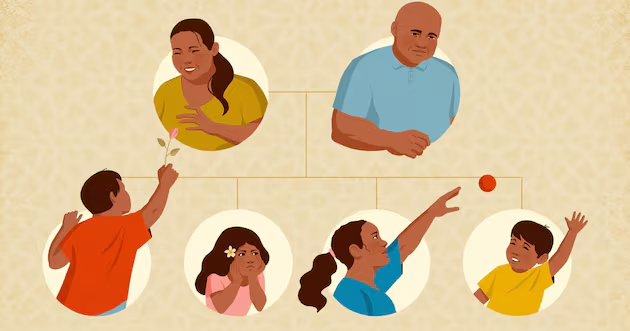
- Economic changes alone cannot solve falling birth rates. Ultra-Orthodox Jews in New York average 7.5 children per woman compared to 1.6 for college-educated white women in the same economic area.
- Positive peer support common in the US, UK, and Israel raises the likelihood of wanting another child by 20%. Yet only 4% of respondents in Japan and 6% in South Korea expect friends to help with meals after a birth.
- Moral duty fails to drive fertility — China has high obligation views but birth rates below 1 child per woman. Instead, those who view children as a source of joy are 30% more likely to want another child.
- Parental encouragement leads to a 30% higher likelihood of intending more children, and admiring public figures with larger families boosts that likelihood by 14%.
Almost every country trying to solve its falling birth rate makes the same fundamental mistake: assuming people just need a bigger check from the government.
Read more Utah business, government leaders deepen connections in Ireland
But throwing money at the baby bust consistently fails for a simple reason — people don’t primarily have children out of economic utility or civic duty. They tend to have children when family and friends support them and their daily social world tells them that parenthood is a pathway to joy, not just financial burden.
From 2010 to 2026, ultra-Orthodox Jews in the New York City metro area averaged 7.5 children per woman. In the same metro area, over the same years, college-educated white women averaged 1.58 children per woman. This pattern shows up in other places, with Amish communities in Ohio averaging about six children per woman, compared with two children per woman more generally across the state.
These people live in similar economic worlds yet end up with radically different families. Nobody disputes that housing costs, childcare prices and household incomes matter when it comes to birthrate trends, but there is reason to believe that there is much more to the story.
Child-friendly cultures
What is it about some cultures that makes them more child-centered than others?
That is the core question behind “Baby Nudges: How Social Influences Shape Fertility Choices,” a new joint report from the Wheatley Institute and the Institute for Family Studies. Drawing on a survey of nearly 10,000 people across the U.S. and more than a dozen countries, we set out to open the black box of cultural fertility choices.
We asked about friends, parents, celebrities, religious leaders, personal values and household chores. We also built a database of over 236,000 public figures to track how the family lives of cultural elites shape everyone else.
The headline finding is simple: People tend to have the families their communities tell them are good to have.
Friends who celebrate
Each additional child in our own homes has been met with an outpouring of support from family, friends and our faith communities: meals, babysitting, effusive congratulations and celebrations.
That kind of support turns out to matter a great deal. In our survey, the United States is tied with the United Kingdom and Israel for the highest reported support from friends and close social ties — especially within the most religiously committed communities. Over 20% of American respondents expect friends to bring them meals after a new baby. In Japan, only 4% do; in South Korea only 6%. Parenting in East Asia appears more isolated, and this gap between the most and least supportive countries predicts a whole extra child in intended family size.
Within individual countries, believing one’s friends would celebrate a new baby is likewise associated with a 10% increase in desired number of children and a 20% increase in the likelihood of intending to have another child. Disapproval from friends cuts the other way, with a 22% lower likelihood of intending to have another child.
It’s with the decision to have a first child where this impact is most apparent, which is exactly where the largest recent fertility declines have been concentrated.
There’s also a sobering flip side to these trends. As people have more children, society’s reaction tends to get less positive. First babies get baby showers, while third and fourth babies are more likely to get raised eyebrows. In our survey, worries about being discriminated against for having “too many children” and reports of friends saying, “Don’t have more,” rise steadily with each additional child.
In defense of meddlesome parents
Young people around the world share the experience of their elders asking them, “When are you going to get married?” and “When will you have children?” Would-be grandparents may wonder whether asking these questions accomplishes anything.
In defense of meddlesome parents the world over, it clearly does. Parents encouraging their children to become parents is associated with an 11% higher desired number of children and a 30% higher likelihood of intending to have another child. These associations show up across cultures.
But how parents encourage family formation matters. Child-centered beliefs that reflect personal appreciation for children and family life specifically predict fertility intentions, whereas general beliefs about the moral obligation to have children mostly don’t.
Therefore, parental encouragement focused on duty or nagging falls flat. Would-be grandparents are far more effective when they emphasize their willingness to help and share how much meaning parenthood brought into their own lives.
Joy, not obligation
Interestingly enough, believing that most people have a moral obligation to have children does not significantly predict the intent to have a child. The country where respondents are most likely to say people are obligated to have children is mainland China, where fertility is now below one child per woman.
What does predict higher fertility is joy. People who believe children are one of the greatest joys in life are about 30% more likely to intend to have another child. Those who hold that belief, or who see children as the future of their community, want to have more children and ultimately do just that.
The flip side is telling. Among people without children, believing that having children is a serious burden is associated with a 19% lower chance of intending to have a child and a 24% lower desired family size. And childless people are far more likely than actual parents to see children as a major burden.
That suggests many people discover parenting is more rewarding than they believed or feared. Young adults’ exaggerated beliefs about the difficulty of parenthood may be steering them away from the families they actually want to have.
High levels of “safety-ism,” anxiety and pessimism are also associated with falling fertility. Countries like Japan and Korea, who rate their risk tolerance the lowest, are less likely to have children, while there is higher likelihood among countries like the U.S. and Egypt, which have a higher risk tolerance.
Smartphones and social media also play a role. Respondents who spend at least two hours a day online report a 5% lower desired family size. Celebrity culture leaves a mark: Individuals who admire a public figure with a large family show a 14% increase in the likelihood of wanting another child.
‘Multiply and replenish’
We have long known that religious people have more children, and our survey reconfirms it. Being in the top third of religiosity is associated with having 9% more children, 12% higher intentions of more children and 15% higher desire for more children.
But what is it about religion that shapes fertility? Within countries, we found no detectable impact on fertility for how often people hear religious leaders talk about the importance of marriage and childbearing.
What seems to matter more is community support. Religious communities that support young families, model joyful family life and build networks of mutual help can be very effective at encouraging more family formation.
A culture that celebrates children
In every country studied except Israel, people end up with smaller families than they say would make them happiest. While financial obstacles are real, closing this gap will not just be a matter of financial policy.
The good news is that the most potent ways to encourage family formation are things ordinary people can do in their day-to-day lives:
- Grandparents: Share the joys of raising children and offer hands-on help.
- Friends: Welcome new babies — whether the first or the fifth — with genuine celebration.
- Religious leaders: Preach the beauty of family rather than the burden of duty.
- Policymakers: Focus on meaningful social support instead of “have one for the country” appeals.
Fixing the birth rate is less about financial policy and more about building a culture where parenting is seen as a shared, joyful adventure.
The full report, “Baby Nudges: How Social Influences Shape Fertility Choices,” and an interactive data tool are available at ifstudies.org and https://wheatley.byu.edu.
Read more Are Utah’s public colleges edging closer to the expected ‘demographic cliff?’