
A regular morning for Samantha Garcia, an employee and resident of Eagle Point Ski Resort in central Utah, starts with a coffee made using a mocha pot given to her by her dad. When her brew is ready, she heads out to the wraparound porch outside her mountain cabin that overlooks thousands of acres of land she’s grown so accustomed to yet it’s “so luscious” it still gives her “full body chills.”
Read more Stars come out to watch Darryn Peterson vs. AJ Dybantsa
“I’d go outside and I would just listen to the woodpecker outside,” she said. “I had a lawn chair and just sitting and being like, no matter what life is throwing at me, I have this place, it is so magical.”
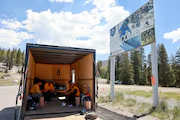
But today, Garcia woke up in a trailer, donned clothes she obtained from a local donation center, washed her hair in the trailer bathroom using donated shampoo and left — without her morning mocha.
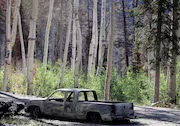
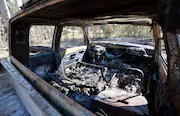
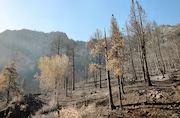
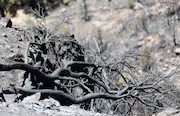
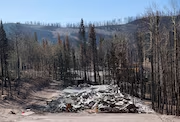
Her mountain view Thursday was a charred pile of “a lifelong of knickknacks” — her heirloom mocha pot lying among them. The woodpecker was there, the sound of its beak against burnt-black trees one of the few signs of life within miles.
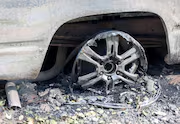
Garcia’s canyonside residence was one of almost 150 homes lost in the Cottonwood Fire, a disaster that forced many families to completely evacuate.
The Cottonwood Fire is one example of the fury of this wildfire season in Utah, which is currently home to 442 active wildfires. At its start, the Cottonwood Fire spread rapidly, overtaking 10,000 acres in its first 24 hours and topping the charts as the largest fire in the nation for several days, until the Babylon Fire in San Juan County, Utah, surpassed it by sweeping over 100,000 acres.
Utah is particularly susceptible to wildfires this season because of historically dry and hot weather conditions. Just over halfway through the year, Utah has already seen 442 wildfires — a statistic increasing by the day.
The land consumed by the Cottonwood Fire adds to the almost 365,000 acres of land burned in Utah this wildfire season, according to Utah Fire Info, and totals continue to rise as existing flames spread and new fires ignite.
The abandoned homes sitting hillside on the charred mountain behind Garcia were a solemn sight, but in her voice was something surprising — gratitude for her safety and hope that she would have her home back soon. Through the warmth of a genuine smile, she described the countless people in her community providing her food, clothes, shoes and company.
“I was once a community builder. And now I’m a full-time crisis manager.”
— Eagle Point Ski Resort owner Shane Gadbaw
“Grief comes in all different waves, and I think it just makes it really easy for me to have this community,” Garcia said. “It’s really hard to look at the damage, but I’m a silver lining kind of gal. This mountain’s gonna come back.”
Eagle Point Ski Resort is devastated, but determined to rebuild
It’s been more than two weeks since families living in the area were evacuated. The morning of the evacuation, Garcia was enjoying ice cream with her coworker’s son, swirling around on spinning chairs, “not knowing that that was the last time I was ever gonna be up there.”
An hour later, she was carrying the child down the mountain under orders to evacuate.
The Cottonwood Fire, which began June 22, currently expands over 96,000 acres of land. More than 1,200 firefighters are actively on-duty working to contain it.
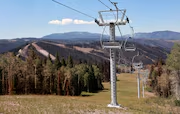
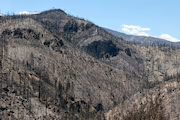
Eagle Point Ski Resort — which has seen half of its land burned in addition to several homes, lodges and ski lifts — is a community particularly vulnerable to the fire damage.
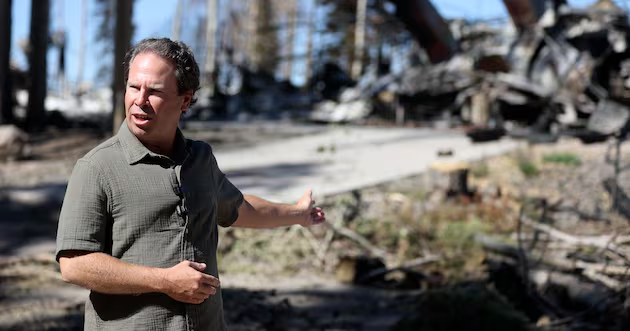
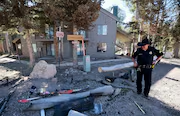
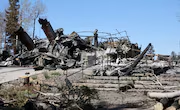
Eagle Point Ski Resort owner Shane Gadbaw spoke to reporters Thursday, standing in the wreckage of the Canyonside Lodge where his daughter celebrated her first birthday 15 years ago. His green shirt stood at stark contrast to the black trees behind him.
Across from him was Mt. Holly Village, a deserted community of condos.
“There’s just so many memories you know, here in this village that have been destroyed,” Gadpaw said, looking around. “This is my heart and soul for 17 years.”
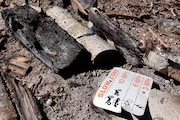
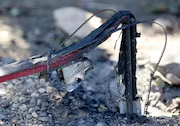
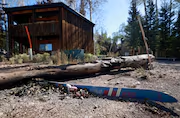
Outside the first unit was a single ski, child-sized, burnt so severely it was shaped like an “S.” Next to it was a charred gardening glove and a tipped-over potted plant. On the deck of unit No. 8 was a cup left from an unfinished drink.
“I was once a community builder,” he continued. “And now I’m a full-time crisis manager.”
The hardest part, however, is over, Gadpaw said. “I’ll just make this clear — we will rebuild Eagle Point.”
Read more AJ Dybantsa enjoys strong NBA Summer League debut, bests Darryn Peterson
Gadbaw emphasized that large parts of the resort were preserved from the effects of the fire, providing idyllic areas for recovery to begin.
It’s too early to estimate a timeline for the rebuilding, but Gadbaw is “here for the long haul,” he said. “This is my life’s work.”
“The fire forever damaged parts of this mountain, but the spirit of the community is untouched, and it’s with that spirit that we will rebuild the resort and the community.”
Community efforts support displaced residents
Dacie Derbidge, lifelong Beaver County resident, volunteers to help the families displaced by the fire. The efforts are largely supported by private donations, and some large companies have contributed, providing monetary donations or supplies like water bottles and electrolytes.
A local bank even donated enough funds to provide a displaced family with a trailer home to replace the one they lost in the fire.
Derbidge said the community efforts to support affected families reflect a valuable part of the county’s culture.
“Beaver is amazing that way,” she said. “We rally around each other.”
As Derbidge stood on a blackened mountain that her sons used to glide down during their holiday ski trips, she repeated the phrase common among many Eagle Point residents: “We will be back.”
Water conditions remain a looming threat
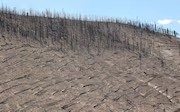
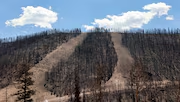
The Cottonwood fire is 60% contained, but officials anticipate the effects will be felt long after all the flames have been smoldered. The burnt mountains pose a significant risk for flash flooding and runoff because ash does not absorb water.
“The thing that I’m worried most about is the floods,” Sgt. Glen Woolsey of the Beaver County Sheriff’s office told the Deseret News. “The devastation from the floods or the water runoffs can be more devastating than the fire itself.”
Houses that survived the wildfire are being surrounded with sandbags to prevent flood damage.
“If it rains, I just hope it doesn’t rain hard,” Woolsey said.
In addition to floods, heavy rainfalls can wash debris into city water, affecting the quality of water sources used to meet residential and irrigational needs.
Tammy Pearson, Beaver County Commissioner, said county crews are working with engineers to gather debris and haul them out of the valley, but that alone cannot completely reverse the threat.
As she described the damage done to the land, Pearson began to tear up.
“The devastation from the floods or the water runoffs can be more devastating than the fire itself.”
— Beaver County Sheriff’s Department Sgt. Glen Woolsey
“It really is heaven on earth up here,” she said. Pearson, who lives in Minersville, describes herself as “desert rat,” but said she misses the green mountain.


Looking forward: What will happen following the fire?
Kendall Nelson, agency administrator for Fish Lake National Forest, said firefighters continue to work “aggressively” to contain the fire. Nelson could not estimate when the fire would be completely contained, but he expects the damage to be evident for a while.
“You will still continue to see this fire smoke at times,” he said. “It will remind us that it’s still out here on the landscape.”
“This mountain’s gonna come back.”
— Beaver County resident Samantha Garcia
Hopefully it won’t be too long before Garcia can settle in her lawn chair to enjoy her mountain view again, with coffee in hand. Until then, however, her community has her back.
Read more Collegiate golfers dominate Utah Men’s State Amateur quarterfinals