
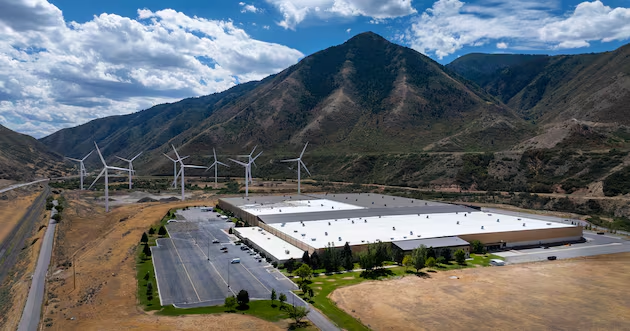
The House passed a bipartisan effort to shield taxpayers from covering the costs of massive data centers that require upgrades to the electrical grid, addressing an issue that has become a major concern ahead of the midterm elections.
Read more Utah Rep. Owens: International athletes are taking too many scholarships from Americans
In an almost unanimous vote, lawmakers voted 417-3 to approve the measure, overcoming the two-thirds majority needed to expedite passage in the House. The bill now heads to the Senate, where it’s unclear whether Republican leaders will schedule a vote before leaving town to campaign for the November election.
The proposal comes as an increasing number of Americans oppose the construction of AI data centers in their local area, becoming a political flashpoint heading into the midterm elections.
The issue of data centers became a major concern during Utah’s primary elections, after local leaders proposed a data center in Box Elder County spearheaded by celebrity investor Kevin O’Leary. A majority of Utah voters at the time said they opposed the project, according to a poll conducted by Morning Consult for the Deseret News and Hinckley Institute of Politics.
The debate bled into primary fights for Utah Reps. Blake Moore and Celeste Maloy, both of whom voted in favor of the bill on Wednesday. The other two members of the Utah delegation, Reps. Burgess Owens and Mike Kennedy, also voted yes.
Read more One of the strongest El Niño events ever brought big snow to the West. Will history repeat?
What does the Ratepayer Protection Act do?
The Ratepayer Protection Act would target large data centers by requiring state utility regulators to consider adopting standards to hold those centers responsible for expensive updates that are necessary to provide its services to customers. The requirements would specifically target data centers that use at least 100 megawatts of electricity at one site or campus.
The rates would be designed to ensure that the data center pays the full additional cost, protecting taxpayers from having their own costs increased. Those rates would remain intact even if the data center cancels its agreement or stops buying electricity after the upgrades are made.
Those rates must be paid before the utility provider begins constructing the upgrades, according to the bill.
It’s not yet clear when, or if, the Senate will consider the bill. Senate Majority Leader John Thune, R-S.D., told reporters on Monday that it would likely require unanimous consent to expedite its passage in the Senate, which is far from guaranteed.
Read more Film society sets long-awaited reopening target for historic Tower Theatre