
An ocean of gray-green sagebrush sprawls between the peaks that ripple across the desert. A scent like camphor and pine hangs heavy on the air. They say my great-great-uncle saw the heavens cleave asunder from the back of a horse, a distant pillar of atomic smoke, because some folks back East decided this land was worthless.
Read more Federal judge dismisses woman from lawsuit against Tim Ballard
Decades later, as a depressed teenage boy, I ride behind my grandfather over the same landscape. Iron buckles and bits jingle as hooves plunge into the earth, kicking up dust that tastes like dry.
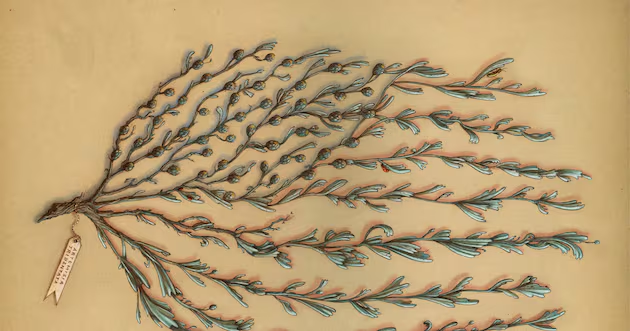
Artemisia tridentata was here long before me, my family or any of the small towns strung like jewels along the Nevada interstate. Sagebrush relies on water from deep in the earth, lifting and spreading it to sustain life in the long months between rains.
It grows in clumps, some plants as tall as I am. It shelters smaller creatures, feeds larger ones and taught my pioneer ancestors the first law of the desert: Take only what you need.
It’s a symbol of my home, the western fringe of the Great Basin, a distant incarnation of the American experiment. But at 17, I can’t stop looking past the horizon.
Papa — that’s what we call my grandfather — has been leading grandkids on rides like this all day, so the horses are tired. But if Papa’s tired, he doesn’t show it. His days are still filled with the back-breaking labor of the ranch. We ride in silence, with no destination but our shared company.
He admires the stark beauty of his home, as the setting sun casts long shadows through the sagebrush canopy below. As a child, I was fascinated by the desert’s mysteries, finding meaning in every kind of relic. Now I tap the saddlehorn in rhythm to make the time pass.
Read more How much did immigration drive up home prices? New federal report makes a guess
Suddenly my horse starts acting up, fighting the reins. I fight back, then realize it could get me bucked off, so I relent, letting him trot toward some delicious wild grasses. Papa stops to check on us, then spots a broken stretch of fence and gets to working the barbed wire.
Resigned to waiting them both out, I slide down from the saddle and land with a crunch. My boots crush a bundle of sagebrush. A whiff of that ancient incense hits my nostrils like smelling salts.
I awake to see insects darting from flower to flower, pale green or deep yellow. A jackrabbit bursts from the depths, blitzing through the shrubs. For the first time in years, I look at the sagebrush, its twisted, spindly branches and ashy bark, and hear the wind rustling through its wedge-like leaves.
I pluck a sprig and crush a few leaves between my fingers, watching flakes fall like desert snow and breathing in that signature spice. Papa calls it Cowboy Cologne.
As the sunset fades to purple, he finally climbs back into his saddle. A cracked smartphone buzzes in his chest pocket — Gramma, calling us back to the ranch house.
In the palms of my hands, I can feel the aridity in which the sagebrush thrives, where my people came to build a new life, determined to forge destiny from hardship. But the desert is patient, and it teaches what hardship alone cannot.
Read more Utah AD Mark Harlan talks private equity, Adidas deal, Huntsman Center renovation and more
Nearby, a lizard scurries up a branch, looking proud of its home.