
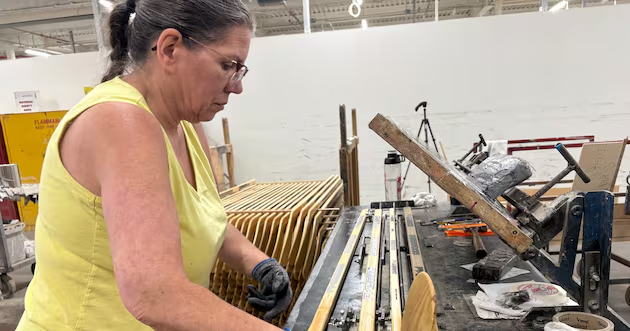
- President Trump signed proclamations imposing a wave of new tariffs on Canadian goods.
- The 50% levies target over 500 products, including wine, cheese and hockey sticks.
- The new trade sanctions don’t take effect for 30 days, leaving room for negotiations.
President Donald Trump signed a package of proclamations aiming to impose stiff tariffs on a wide range of Canadian goods just weeks after his administration declined to renew a benchmark North American trade agreement that he negotiated during his first term in office.
Read more Opinion: The other tax that Utah taxpayers should look out for
The new trade sanctions, leveraging a little-used section of the Tariff Act of 1930, call for 50% fees on a disparate list of over 500 products that include dairy products, alcohol, flowers, paper products, makeup and hockey sticks.
While the list is long, the total value of the Canadian trade goods comes in around $20 billion, just a small slice of the overall trade with the second largest U.S. trading partner. Last year the two countries moved some $720 billion in goods across their borders in both directions.
The tariffs are set to take effect in 30 days, according to the Trump administration, a move many see as opening a window for negotiations. Trade experts predict the tariffs will face widespread legal challenges if left in place.
Trump’s new levies follow his decision not to renew the trilateral U.S.-Mexico-Canada Agreement that was up for review on July 1 this year.
At a 2020 Michigan event held to celebrate the newly struck agreement, Trump lauded the deal.
“The USMCA is the fairest, most balanced, and beneficial trade agreement we have ever signed into law,” Trump told workers at Dana Incorporated. “It’s the best agreement we’ve ever made, and we have others coming.”
Read more ‘It’s official’: Darline Graham Nordone announces Senate candidacy
But the president has pivoted on that position since returning to office.
“I don’t know that I’m going to renew it,” Trump said of USMCA in June, per a CNBC report. “We don’t need anything that Canada has. We don’t need anything that Mexico has, but they need everything that we have. And they have to treat us better.”
Do tariffs work?
During his presentation at the Zions Bank/World Trade Center Utah Crossroads of the World trade summit in Salt Lake City in May, former U.S. trade ambassador Robert Lighthizer said that trade levies were once a useful part of overall trade policy for the U.S. but that is no longer the case.
“The belief is that the principal barrier to trade is tariffs. And therefore you negotiate tariffs,” Lighthizer said. “But that hasn’t been true for a generation and a half. The principal barriers to trade are a whole bunch of things we call industrial policy.”
Industrial policy, Lighthizer explained, incorporates a wide range of domestic policies that can include banking systems, currency policy, labor laws, regulatory burdens, subsidies and more.
“These are the principal barriers of trade … and really can’t be negotiated,” he said. “They are too complicated.”
At the May event, Lighthizer said he believes Trump was elected largely due to dissatisfaction with the current global trade environment. He praised the president for his actions on trade policy, which he characterized as first steps toward positive change. A raft of punitive tariffs imposed by Trump earlier in his second term was struck down by the Supreme Court in February. Three months later a federal court ruled that a nearly universal 10% tariff put in place following the high court’s ruling was also illegal.