
- Tropical Storm Rachel’s leftover moisture could bring flash flooding to Utah and Arizona late this weekend into Monday, but the rain may also give the drought-stricken Colorado River watershed a small boost.
- Simon is forecast to strengthen into a major hurricane and hit Mexico’s west coast near Puerto Vallarta this weekend, though forecasters say its effects on the U.S. are highly uncertain.
- Hurricane Isaias, the Atlantic’s first hurricane of 2026, is expected to make landfall near Pensacola late Friday or early Saturday, with up to 7 feet of storm surge and power outages that could reach far inland.
What began as a sunny, predictable week of weather in the West could soon take a turbulent turn as Rachel, Simon and Isaias threaten parts of the U.S. with torrential rain, flash flooding and dangerous travel conditions.
Read more Prince Harry turns grief into a MasterClass
The three systems are developing in waters off both U.S. coasts, and together could affect millions of Americans in the coming days.
“This is insane!” meteorologist Ross Ellet posted on Facebook early Thursday morning. “Not 1, not 2, but 3 tropical systems are now on track to hit the United States this weekend into early next week.”
Hurricane Rachel has taken an unusual U-turn in the Pacific Ocean after moving west for more than a week, and is forecast to stall Thursday before turning sharply northeast toward northern Baja California. AccuWeather lead hurricane expert Alex DaSilva expects the storm to drench parts of the Great Basin, potentially triggering major flooding in Arizona and Utah yet bringing some relief to Lake Powell and Lake Mead.
Meanwhile, Simon is a developing tropical storm expected to hit Mexico’s west coast on Sunday, including the popular tourist destination of Puerto Vallarta. Its remnants could then move north into the U.S., although meteorologist John Baranick wrote “impacts from this system are highly uncertain.”
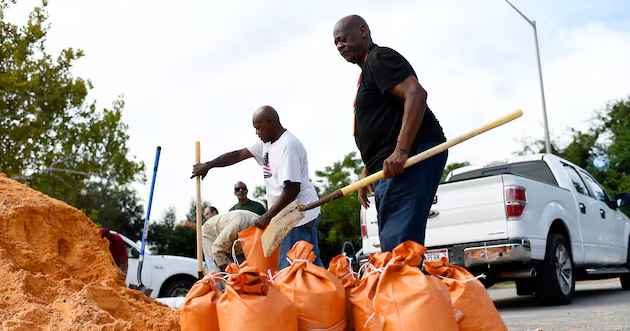
Hurricane Isaias became the first hurricane of the 2026 Atlantic season late Wednesday. It is expected to weaken somewhat before making landfall early Saturday, but forecasters still warn of several feet of storm surge, and states of emergency have already been declared in parts of Alabama and Florida.
“While I hope for minimal impacts, we must take preparations seriously,” Alabama Gov. Kay Ivey posted on X.
I have issued a state of emergency for 40 counties.
Forecasts continue to show the real likelihood that the tropical system brewing in the Gulf could impact Alabama as a hurricane as early as Friday.
While I hope for minimal impacts, we must take preparations seriously. #alwx pic.twitter.com/GFidkQUXO0
— Governor Kay Ivey (@GovernorKayIvey) October 7, 2026
Rachel’s double-edged impact on the Southwest
Hurricane Rachel briefly reached Category 3 strength last week but has weakened over cooler water and is expected to reach Mexico as a much weaker storm. Its moisture could still bring flooding to parts of Mexico and the southwestern U.S.
“Hurricane Rachel in the Pacific basin is expected to make landfall in Mexico later this weekend, with Rachel’s moisture bringing a flooding threat to the Southwest Sunday and Monday,” AccuWeather said in an email quoted by USA Today.
Parts of northern Mexico and the Southwest are still recovering from Hurricane Polo’s flooding, and AccuWeather warns that more downpours after weeks of heavy rain in Arizona and Utah could trigger “life-threatening flash flooding” along with mudslides and debris flows in vulnerable terrain.
In Southern California, the problem is surf and wind, not just rain. Earlier storms have already caused significant beach erosion and coastal flooding, and Fox Weather notes that Rachel could bring life-threatening surf to the same area that Hurricane Marie damaged last month.
Read more High school boys golf: 6A final region recaps, Farmington, Bingham, Lehi win region titles
Yet the moisture that threatens coasts and flash flooding could also deliver a much-needed soaking to the Colorado River watershed, where lakes Powell and Mead hit historic lows this summer.
Rachel’s rain won’t refill the reservoirs, since most of the river’s water comes from spring snowmelt in the Rockies. But by soaking dry soil now, it could help more of next spring’s melt reach the Colorado River.
Simon threatens Mexico before turning north
Simon is the 21st named storm and is forecast to become the 11th hurricane of a very busy Pacific season, fueled by a strengthening El Niño. It is projected to hit Mexico’s west coast, including Puerto Vallarta, on Sunday and Monday before its remnants cross the southern tip of Baja and move into the U.S.
The National Hurricane Center forecasts that Simon will peak with winds at 115 mph on Saturday, near the Jalisco coast. Although the storm is still gaining strength and its full impact remains uncertain, Simon has the potential for heavy rainfall in the Four Corners area and Southern Plains.
“Waters off the coast of Mexico are extremely warm for this time of year, allowing for rapid intensification,” Baranick wrote in his update for DTN.
Isaias takes aim at the Gulf Coast
Although Isaias is only projected to reach the northern Gulf Coast as a Category 2 hurricane, the far-reaching impact of the storm is what makes it dangerous.
The storm is expected to make landfall late Friday or early Saturday near Pensacola, Florida, and could bring 5 to 7 feet of storm surge along with gusts of 100 to 120 mph near its center. Power outages could last days and reach well inland through Alabama and into Tennessee.
“Preparations to protect life and property from storm surge and damaging winds along the warning area of the Gulf Coast should be rushed to completion today,” the NHC said Thursday morning.
Isaias could also bring tornadoes and up to 10 inches of rain, with flash flooding into the Appalachians, the Ohio Valley and the mid-Atlantic.
El Nino explains why the Pacific keeps producing storms like Rachel and Simon, and why Isaias is the Atlantic’s first hurricane this late in the year. Though the storms are all taking different paths, forecasters say all three are reminders that conditions can change quickly, and residents should be ready to act when warnings are issued.
Read more High school cross country: 2A region championships recap