
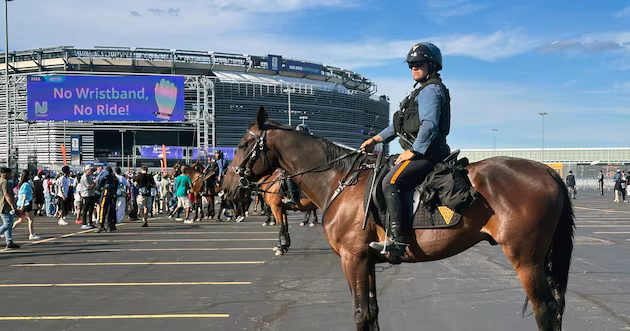
At the UFC event at the White House earlier this month, the FBI uncovered an alleged plot that would have used drones to attack attendees. Though the plot was foiled early, the threat highlights a growing concern for law enforcement.
Read more This Utah summer concert series just added another show — and it’s a really big one
In a statement on X last December, FBI Director Kash Patel said, “Unmanned aircraft are increasingly exploited by criminals, terrorists, and hostile foreign actors — making the counter (drone) program a critical area for the FBI to modernize and adapt to stay ahead of the threat.”
“Our training center,” Patel continued, “builds disciplined, safety-focused, coordinated counter-drone capability and supports preparedness for major national and international events like the FIFA World Cup 2026 and the 2028 Summer Olympics hosted in the U.S.”
Drone threats are not new, as the FBI and local law enforcement have been working for years to develop counter-drone systems that can protect large-scale events.
Cities like New York City invested millions in counter-drone technology as they prepared to host major events like the World Cup and America 250 celebrations.
The World Cup, which began earlier this month, is one of the most popular sporting events in the world. This year, FIFA estimates that over 5 million people will attend the 104 matches, 78 of which will be held in the U.S. The heavy traffic of international fans has sparked fears about potential strikes or attacks on the games.
Take a look inside the International Police Cooperation Center (IPCC) facility – a command post stood up and led by the FBI with our interagency partners for safeguarding the @FIFAWorldCup, including law enforcement officials from 46 countries and all venue sites for World Cup… pic.twitter.com/MpeGfgkNF4
— FBI (@FBI) June 22, 2026
To deter hobbyists from flying drones around the events, the FBI has posted announcements in each city that warn about flying a drone in no-fly zones.
The Washington Examiner reported that the FBI has already seized over 300 drones since the beginning of the World Cup.
FIFA president Gianni Infantino announced on Fox & Friends Tuesday that President Donald Trump will be attending the World Cup Final and will help hand the trophy to the winning team. In addition to the massive crowds, the security must also provide security for notable attendees of the event.
The counter-drone systems use drones, AI, radio frequency monitoring and jamming technologies to mitigate threats of attack.
Fighting drones with drones
In a press briefing, Andrew Giuliani, executive director for the White House Task Force on the FIFA World Cup 2026, said, “All 78 matches will have counter-(drone) mitigation protection.”
Since many drones are flying over populated areas, shooting down drones could result in injuries or damage to infrastructure.
A safer method being employed by law enforcement uses a DroneHunter that fires a net to safely down other drones. The net attaches to the drone and deploys a parachute that lowers it safely to the ground.
Read more Cottonwood Fire destroys southern Utah ski resort
Drones are also used as eyes in the skies to mitigate threats on the ground. Skydio’s autonomous drones are being used in every host city as surveillance tools, providing high-quality video for security assessment and crowd monitoring.
AI in counter-drone technology
As millions of people flock to major metropolises for matches across the U.S., the risk of emergency response needs climbs. In order to be prepared for the potential demand, artificial intelligence is being used to gather and interpret information related to security threats.
RapidSOS, an intelligent emergency response platform, collects data like GPS location or medical profiles to rapidly provide important information to first responders. It uses its model, HARMONY AI, to collect information from millions of devices in order to better provide immediate emergency assistance.
AI can also help with rapid translation, which is especially needed in a situation like the World Cup where people from all over the world, speaking dozens of languages, gather in a handful of settings.
Other counter-drone technologies like radio-frequency sensors use AI to detect drone frequencies that humans can’t detect, notably when crowd noise remains steady throughout the matches. The AI systems can also filter through signals from cellphones and other electronic devices.
DroneHunters use AI to aid in tracking and targeting other drones, and cyber systems use AI to help override command of rogue drones.
Noise detection and jamming technology
Some of the most critical technologies in counter-drone efforts are noise detection, signal jamming and command override.
Sensors can be used to detect drone signals and can help locate the drone for further measures. Once a drone has been located, law enforcement can use special technology that jams the signal between the pilot and drone, causing the drone to descend to the ground.
Law enforcement can also override command of a drone and become the pilot, which they then use to fly the drone to a safe location.
The Los Angeles Times reported that the military has even more tools and technology to combat drone threats, but the FBI is not issued the same level of authority as the military.
“We are in all the host cities working closely with local, state, and international partners,” said Patel in an FBI video about World Cup security. “We’re sharing information, planning for emergencies, and coordinating across agencies to make sure the matches run smoothly.”
“This is more than just security,” Patel continued. “This is about protecting America’s legacy on the world stage. From beginning to end, our goal is simple: to keep the FIFA World Cup 2026 a safe, unforgettable celebration for everyone.”
Read more Deseret News archives: America’s Berlin Airlift was a success, with a sweet Utah twist